
Products / Microscope Illumination
Microscope Illumination
LED and fibre-optic microscope light sources for fluorescence and bright-field microscopy. Full range of integrated fluorescence and transmitted illumination systems, ideal for routine and advanced applications across the UK.


LED illumination
Instant-on, long-life and wavelength-specific. The standard for modern fluorescence microscopy. Controllable via USB, TTL or desktop controller.

Fibre-optic illumination
Flexible positioning via liquid or fibre light guide. Reduces heat at sample. Ideal for stereo microscopes and ring light applications.
Halogen illumination
Broad-spectrum white light for bright-field, phase contrast and DIC. HAL 100 for transmitted light on Zeiss upright microscopes.

Multi-channel fluorescence
Up to 16 selectable excitation channels across 365–770nm. Control multiple fluorophores with precise wavelength and intensity management.
MICROSCOPE LIGHT SOURCES UK
Illumination for every microscopy technique
Indigo Scientific supplies a full range of microscope light sources for fluorescence, bright-field, phase contrast, DIC and darkfield microscopy. Our range covers LED illumination, halogen light sources, fibre-optic cold light sources and integrated fluorescence systems, for both routine and advanced imaging applications across the UK.
Choosing the right illumination is not just about wattage. The wavelength channels, delivery method, control interface and fluorophore compatibility all affect imaging quality significantly. Our team provides expert advice on wavelength selection and system setup, contact us before ordering if you are not certain which system is right for your application.
MICROSCOPE LIGHT SOURCES UK
Full range of illumination systems
All systems are available to order with pricing on request. Contact us for a quotation or advice on compatibility with your microscope.

Microscope Light Sources
ZEISS CL 1500/CL 4500 LED
CL1500/4500 cold light sources for stereo microscopes. Fibre-optic delivery for flexible positioning and heat-free illumination at the sample. Halogen and LED variants available.
Cold light · Stereo microscopes
Prices from £758.00 (Contact for Quote)
Microscope Light Sources
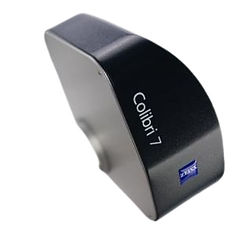
ZEISS Colibri 7
7-channel LED illumination from 355nm to 661nm with optional desktop or TTL control. The most capable Zeiss-integrated illuminator for demanding multi-fluorophore experiments requiring maximum spectral coverage.
355–661 nm · 7 channels · Desktop / TTL control
Prices from £5,107.00 (Contact for Quote)

Microscope Light Sources
CoolLED pE-300
White light source (pE-300 White), 4-channel excitation (pE-300 Lite or Ultra). Controllable via BNC, USB or desktop controller. Versatile standalone system compatible with a wide range of microscopes via light guide or direct coupling.
365–635 nm or White light · 4 channels · USB / BNC
Contact for Pricing

Microscope Light Sources
CoolLED pE-800
8-channel LED excitation from 340–750nm or 340–635nm. Direct coupling via light guide with USB or TTL control. Designed for demanding multi-fluorophore fluorescence microscopy where broad wavelength coverage and simultaneous control are required.
340–750 nm or 340–635 nm · 8 channels · USB / TTL
Contact for Pricing

Microscope Light Sources
ZEISS Colibri 3
LED illumination system for Axioscope or Axiovert microscopes. 4 controllable wavelengths between 355–661nm. Directly coupled to compatible Zeiss microscopes for seamless integration and software control.
355–661 nm · 4 channels · Axioscope / Axiovert
Prices from £3,169.00 (Contact for Quote)

Microscope Light Sources
ZEISS HAL 100
HAL 100 halogen light source for transmitted light on Zeiss microscopes. Broad-spectrum white light for bright-field, phase contrast and DIC applications. The standard transmitted illuminator for Zeiss upright and inverted systems.
White light · Transmitted illumination · Zeiss compatible
Prices from £858.00 (Contact for Quote)

Microscope Light Sources
CoolLED pE-400
Control of 4 channels (pE-400 max) or as a white light source. Attached via light guide or direct coupling with control via USB, BNC or desktop controller. Compatible with the vast majority of research microscopes.
365–635 nm or White light · 4 channels · USB / BNC
Contact for Pricing

Microscope Light Sources
CoolLED pT-100
2 variants: LED replacement for a halogen bulb, or excitation at 525nm, 635nm or 770nm. Direct attachment or liquid light guide delivery. Designed as a simple, affordable drop-in upgrade from halogen transmitted illumination.
White light or 525 / 635 / 770 nm · Direct or light guide
Contact for Pricing

Microscope Light Sources
ZEISS Colibri 5
4 illumination channels from 355nm to 661nm. Compatible with all modern Zeiss microscopes, controllable via TTL or desktop controller. Excellent for multi-channel fluorescence applications requiring precise wavelength control.
355–661 nm · 4 channels · All Zeiss microscopes
Prices from £4,426.00 (Contact for Quote)

Microscope Light Sources
CoolLED pE-100
Single-wavelength LED excitation system. Direct attachment or liquid light guide coupling. From 365–770nm selectable wavelength. Controllable via BNC or TTL with optional desktop controller. Ideal for single-fluorophore applications.
365–770 nm · Single wavelength · TTL / BNC
Contact for Pricing

Microscope Light Sources
CoolLED pE4000
16 selectable channel light sources across 365–770nm. Control via USB or BNC with optional desktop controller. The most versatile CoolLED system for multi-fluorophore experiments requiring broad spectral coverage.
365–770 nm · 16 channels · USB / BNC
Contact for Pricing
.jpg)
WHY INDIGO SCIENTIFIC?
Microscope illumination systems for research, clinical and industrial applications
At Indigo Scientific, we offer microscope illumination systems designed for research, clinical and industrial applications. For both bright-field and fluorescence microscopy, the right light source is essential for excitation, contrast and reproducibility. Our LED and fibre-optic setups are suited to both advanced and routine techniques.
We offer expert advice to ensure the illuminator is not only the correct wavelength but also delivers the correct excitation to your system. Our range includes:
-
LED light sources — CoolLED pE series (100, 300, 400, 4000, 800) and Zeiss Colibri (3, 5, 7)
-
Fibre-optic illuminators — CL1500 and CL4500 cold light sources for stereo microscopes
-
Halogen illumination — HAL 100 for transmitted bright-field on Zeiss systems
-
Ring lights
HOW TO CHOOSE
Choosing the right microscope illuminator
Choosing the correct microscope illumination setup depends on the imaging technique and wavelengths required. Bright-field applications are typically fitted with halogen bulbs or white-light LEDs. If a warmer colour is needed, a filter can adjust the LED output to resemble halogen illumination, although the spectrum cannot be matched exactly.
Fluorescence applications require matching excitation wavelengths with your fluorophores to maintain signal quality and reduce crosstalk. Using an illuminator with too few channels, or the wrong wavelength range, will limit which fluorophores you can use and how many channels you can image simultaneously.
Control options vary from desktop controllers to USB interfacing and software integration. Delivery through light guides adds flexibility in positioning but may reduce throughput compared with direct mounting.
If you are not sure which system is right for your application contact our team. We provide expert advice on fluorophore matching and system compatibility before you order.
1
Identify your imaging technique
Bright-field, phase contrast and DIC → white light or halogen. Fluorescence → LED with specific excitation wavelengths matching your fluorophores.
2
List your fluorophores
Each fluorophore needs a specific excitation peak. Check your dyes, DAPI, GFP, mCherry, Cy5 and match to available wavelength channels.
3
Consider your microscope
Zeiss Colibri integrates directly with Zeiss systems. CoolLED pE series connects via light guide or direct coupling to most microscopes.
4
Choose your control method
USB for software integration. TTL for hardware triggering with a camera. Desktop controller for manual operation. BNC for TTL-compatible automation.
5
Not sure? Ask us
We advise on wavelength selection and system compatibility before purchase, contact our team with your microscope model and fluorophore list.
Frequently asked questions
What type of microscope illumination is best for fluorescence imaging?
LED illumination is now the standard for fluorescence microscopy, it provides instant-on switching, long lifespan, precise wavelength control and TTL compatibility for hardware triggering with cameras. The key is matching the LED excitation wavelengths to your fluorophores. Multi-channel systems such as the CoolLED pE-4000 (16 channels, 365–770nm) or Zeiss Colibri 7 (7 channels, 355–661nm) cover the broadest range of fluorophores. For simpler single-fluorophore applications, the CoolLED pE-100 or pE-300 provide affordable entry points.
What is the difference between LED and halogen illumination?
LED illumination is instant-on, wavelength-specific, long-life (typically 50,000+ hours) and can be TTL-triggered for precise synchronisation with camera exposure. It generates less heat at the sample and requires no warm-up. Halogen illumination produces a broad-spectrum continuous white light ideal for bright-field, phase contrast and DIC applications — a warmer colour temperature that some users prefer for transmitted light work. The HAL 100 is the standard Zeiss halogen unit. LED white-light sources can replicate much of halogen's spectrum, though not perfectly, and the pT-100 is designed as a direct halogen replacement.
What are the advantages if fibre optic illumination?
Fibre-optic illumination (also called cold light or light guide illumination) delivers light to the microscope via a flexible fibre-optic cable, keeping the heat source away from the sample. This is particularly useful for stereo microscopes, live sample imaging and heat-sensitive specimens. The CL1500 and CL4500 are cold light sources designed for stereo microscopes. Fibre-optic delivery also allows flexible positioning of the light source relative to the microscope, which is useful in constrained lab spaces. The trade-off is a small reduction in light throughput compared with direct coupling.
Do LED illuminators require calibration or maintainence?
LED light sources require significantly less maintenance than mercury arc lamps or halogen bulbs — there are no bulbs to replace and LED output is stable over time. For quantitative fluorescence work, periodic intensity calibration is advisable to detect any output drift. CoolLED systems include intensity monitoring and can be calibrated via software. Contact us if you need advice on calibration procedures for your system.
Contact our Microscope Illumination Experts
Contact our team for a quote or more information on microscope light sources.
Phone:
+44(0) 1462633500
Email:
hello@indigo-scientific.co.uk